
Glofitamab 10mg Dosage Explained: Understanding the Step-Up Schedule
 10 Oct 2026
Understanding cancer treatment schedules can be difficult, especially when a medicine is given in different doses during the first few weeks. Patients searching for Glofitamab 10mg injection Gurugram may come across information about a “step-up” dosing schedule. This gradual approach is an important part of treatment because glofitamab can cause cytokine release syndrome (CRS), particularly during the early doses. The treatment is administered by intravenous infusion under medical supervision rather than as a routine self-administered injection.
Glofitamab is a bispecific antibody therapy used for certain adults with relapsed or refractory large B-cell lymphoma after previous systemic treatments. It works by helping T cells recognize and attack CD20-positive B cells. Because this immune activation can produce a rapid inflammatory response, the treatment begins with smaller doses before the standard 30 mg dose is introduced.
What Is Glofitamab 10mg and Why Is It Used?
Glofitamab-gxbm is a prescription immunotherapy designed for specific types of relapsed or refractory large B-cell lymphoma. Its approved use includes adults with diffuse large B-cell lymphoma not otherwise specified (DLBCL NOS), or large B-cell lymphoma arising from follicular lymphoma, after two or more previous lines of systemic therapy.
Unlike traditional chemotherapy, glofitamab is a CD20-directed CD3 T-cell engager. One part of the medicine binds to CD20 on B cells, while another interacts with CD3 on T cells. This brings the immune cells into close contact with the lymphoma cells and promotes their destruction.
The 10 mg dose is not generally the first glofitamab dose. Instead, it is the second step in the initial dosing sequence. This distinction is important for anyone researching Best Glofitamab 10mg injection Gurugram, because the 10 mg dose should be understood as part of a medically supervised treatment plan rather than an independent dose that patients select.
Why Does Glofitamab Use a Step-Up Dosing Schedule?
The step-up schedule is primarily intended to reduce the risk and severity of cytokine release syndrome. CRS can happen when activated immune cells release cytokines rapidly, producing symptoms such as fever, chills, low blood pressure, rapid heartbeat, dizziness, or breathing difficulties.
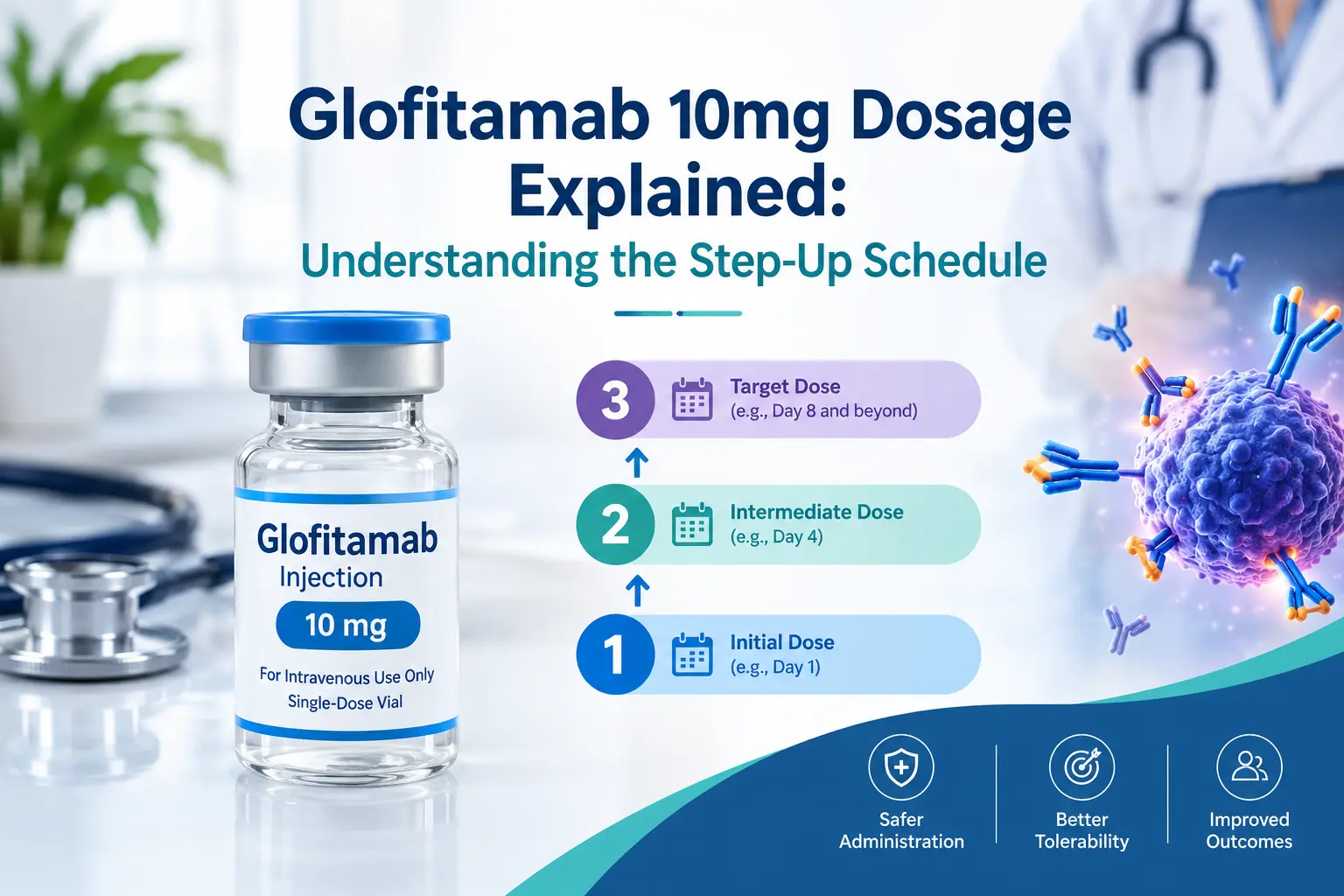
According to prescribing information, treatment begins with obinutuzumab before glofitamab. A single 1,000 mg intravenous dose of obinutuzumab is administered on Cycle 1 Day 1, seven days before starting glofitamab. Glofitamab then begins with a 2.5 mg dose on Day 8 and a 10 mg dose on Day 15. The first 30 mg dose is given on Day 1 of Cycle 2.
The gradual increase allows the healthcare team to observe how the patient's immune system responds before moving to the full target dose.
Glofitamab Step-Up Schedule at a Glance
The standard schedule described in prescribing information is:
Cycle 1, Day 1: Obinutuzumab 1,000 mg IV
Cycle 1, Day 8: Glofitamab 2.5 mg IV
Cycle 1, Day 15: Glofitamab 10 mg IV
Cycle 2, Day 1: Glofitamab 30 mg IV
Cycles 3–12, Day 1: Glofitamab 30 mg IV
Treatment may continue for a maximum of 12 cycles, including the step-up doses, or until disease progression or unacceptable toxicity, whichever occurs first. Each cycle is 21 days.
Glofitamab 10mg Injection Gurugram: What Happens During the 10mg Dose?
The 10 mg dose is administered intravenously in a healthcare setting. It follows the initial 2.5 mg step-up dose and is intended to prepare the body for the subsequent 30 mg target dose.
The 10 mg step-up dose is administered as an intravenous infusion. If a patient experienced CRS during the preceding 2.5 mg dose, additional observation and hospitalization may be recommended according to the treatment protocol. CRS can also occur for the first time with the 10 mg dose, even when the earlier 2.5 mg dose did not cause CRS.
Before each glofitamab infusion, healthcare professionals administer recommended premedications to help reduce the risk of CRS and infusion-related reactions. Patients are also monitored closely during treatment.
This is why patients considering Glofitamab 10mg injection Gurugram should focus on receiving treatment through an appropriately equipped oncology facility rather than treating the medicine like a conventional injectable drug.
What Is the Difference Between the 2.5mg, 10mg and 30mg Doses?
The three glofitamab doses have different roles in the initial treatment schedule.
The 2.5 mg dose is the first glofitamab step-up dose. It introduces the therapy at a relatively low dose so the clinical team can monitor the patient's response.
The 10 mg dose is the second step-up dose. It increases exposure to glofitamab while maintaining the gradual escalation intended to reduce the risk of severe CRS.
The 30 mg dose is the target dose used from Cycle 2 onward, assuming treatment can safely proceed. Later cycles also use 30 mg on Day 1, with infusion duration depending on the patient's previous treatment response and clinical circumstances.
Therefore, the 10 mg dose should not be interpreted as the standard dose for every patient. The appropriate dose and timing depend on the approved treatment protocol, previous reactions, disease status, and the treating oncologist's assessment.
How Is the 10mg Dose Monitored for Safety?
Safety monitoring is an essential part of glofitamab treatment. CRS is the most important early concern, but healthcare professionals also watch for neurological toxicity, infections, blood-count abnormalities, and other treatment-related reactions.
Patients should promptly report symptoms such as:
Fever or chills
Dizziness or light-headedness
Rapid or irregular heartbeat
Difficulty breathing or shortness of breath
Confusion or changes in mental status
These symptoms can have different causes, so patients should not attempt to determine the severity themselves. The treatment team should be contacted promptly when concerning symptoms develop.
Neurological complications can also occur with glofitamab. Reported neurological toxicities include headache, dizziness or vertigo, peripheral neuropathy, and changes in mental status.
Glofitamab 10mg Injection Gurugram: Why Medical Supervision Matters
Glofitamab is not a medicine that should be purchased and administered without specialist supervision. Patients looking for Buy Glofitamab 10mg injection Gurugram should first discuss the treatment with their oncologist and use only an authorized healthcare provider or pharmacy operating within applicable regulations.
Because the medicine requires a specific infusion schedule, premedication, monitoring, and management of possible CRS, treatment location and clinical support are important considerations. A cancer specialist can also determine whether glofitamab is appropriate based on the patient's diagnosis, previous therapies, laboratory results, current medications, and overall treatment plan.
When researching availability, UniMedNTech can serve as an informational reference, but patients should always verify the prescription, formulation, dose, storage requirements, and authorized supply channel with their treating healthcare professional.
What If a Glofitamab Dose Is Delayed?
A delayed dose does not necessarily mean treatment simply continues from the next scheduled date. Depending on how long the treatment has been interrupted, the step-up schedule may need to be restarted or modified.
Prescribing information includes specific recommendations for delayed or missed doses. Therefore, patients should never compensate for a missed infusion by taking an additional dose or changing the treatment interval themselves. The oncology team should determine the appropriate next step.
How Long Does Glofitamab Treatment Continue?
Glofitamab treatment is administered in 21-day cycles. The initial cycle includes the obinutuzumab pretreatment and the 2.5 mg and 10 mg glofitamab step-up doses. The 30 mg target dose begins with Cycle 2.
Treatment can continue for up to 12 cycles, including Cycle 1, unless the disease progresses or unacceptable toxicity requires treatment to stop earlier.
The exact treatment plan can differ when a physician needs to manage adverse reactions, delayed doses, or other clinical circumstances.
Important Points Before Starting Glofitamab
Patients and caregivers should understand that dosage information available online is general information, not a personalized treatment plan. The 10 mg dose is one component of a structured step-up protocol.
Before treatment, discuss allergies, previous cancer treatments, infections, current medicines, pregnancy or breastfeeding considerations, and any previous immune-related reactions with the oncology team. Glofitamab may cause serious CRS and neurological toxicity, so treatment should be delivered in a facility capable of monitoring and managing these complications.
If you are researching the Best Glofitamab 10mg injection Gurugram, compare authorized treatment providers based on specialist supervision, appropriate infusion facilities, prescription requirements, medicine authenticity, and access to emergency medical support rather than choosing solely on price or availability.
Conclusion
The glofitamab step-up schedule is designed to introduce treatment gradually and reduce the risk associated with immune activation. The sequence generally begins with obinutuzumab, followed by glofitamab 2.5 mg on Cycle 1 Day 8, 10 mg on Day 15, and 30 mg from Cycle 2 onward.
For anyone researching Glofitamab 10mg injection Gurugram, the most important point is that the 10 mg dose is a supervised step in a larger oncology treatment plan—not a standalone dose to select or administer independently. Always follow the schedule prescribed by your oncologist and seek immediate medical attention for symptoms that could indicate CRS or another serious reaction.
Frequently Asked Questions
1. Is 10 mg the first dose of glofitamab?
No. The usual step-up schedule starts with 2.5 mg, followed by 10 mg, before the 30 mg target dose.
2. Why is glofitamab given in step-up doses?
The gradual schedule is used to reduce the risk of serious cytokine release syndrome.
3. Is glofitamab 10 mg given as a regular injection?
No. Glofitamab is administered as an intravenous infusion by trained healthcare professionals.
4. What happens after the 10 mg dose?
The standard schedule moves to a 30 mg dose on Day 1 of Cycle 2, provided treatment can safely continue.
5. Can I buy glofitamab without a prescription?
Glofitamab is a prescription cancer medicine and should only be obtained and administered through an appropriate healthcare provider following an oncologist's prescription.